
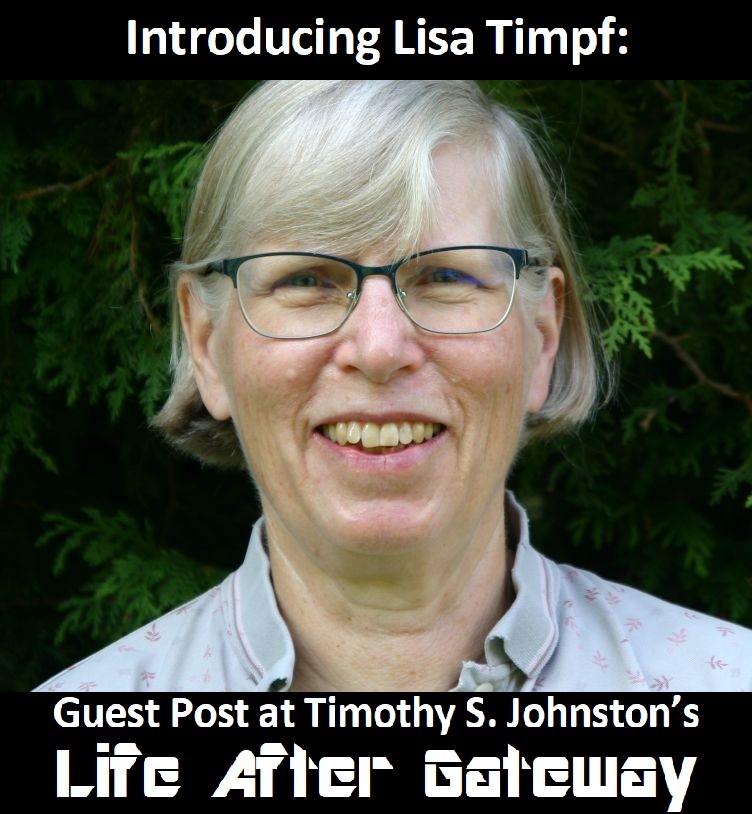
Guest Post: SF Writer Lisa Timpf Sneaks a Peek at the Farms of the Future

Here’s our third guest post at Life After Gateway.
I have sometimes written about farms of the future, although my articles trend toward the Earth’s oceans as our next most valuable ecosystem, particularly involving kelp. Our guest writer today, Lisa Timpf, reminds us of the vast stretches of our solar system, and also of one of the writers from the Golden Age of Science Fiction, Robert Heinlein. It brings to mind the recent book and film, Andy Weir’s The Martian, and how Mark Watney managed to survive for so long by farming the arid and infertile Martian soil.
There is also a unique, personal connection in Lisa’s article. You’ll see why, just below. Thanks to Lisa for contributing this month!
— Timothy
———
Until I was ten years old, my family lived next door to a farm. I have many happy memories of rural life, including biking the sandy lanes between the fields, admiring the yellow toadflax and black-eyed Susans that grew beside the railroad tracks, and climbing the cedars and the cherry tree on our property.
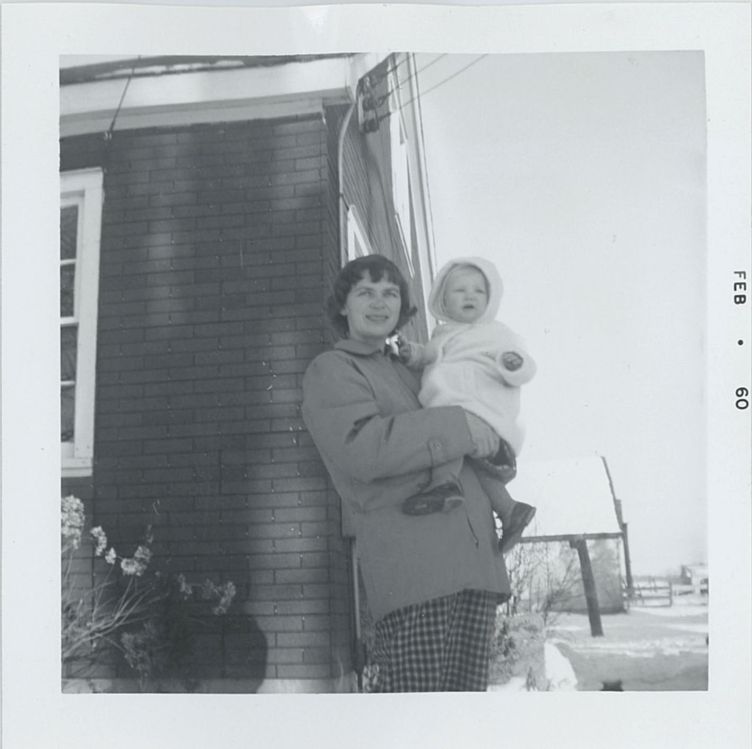
Pictured above: This photo from 1960 shows Lisa with her mom near their house just on the outskirts of Simcoe, Ontario. The building with the snow-covered roof in the background is the pack barn belonging to the tobacco farm next door.
Given this background, perhaps it’s no surprise that when I discovered science fiction as a teenager, Farmer in the Sky by Robert A. Heinlein quickly became one of my favourite tales.
Written in 1950, Farmer in the Sky depicts the adventures of a teenage boy named Bill Lermer who emigrates to Ganymede with his father George, George’s new wife Molly, and Molly’s daughter Peggy.
While some of the colony’s produce is grown or raised in large sheds with artificial lighting, individual farmers also play an important role in food production. Though terraforming has begun, farming on Ganymede is a challenging business. After staking a claim, the would-be farmer uses specialized equipment to break down boulders and lava flows into smaller chunks. The soil must then be ameliorated with “pay dirt,” concentrated soil cultures with bacteria, imported from Earth.
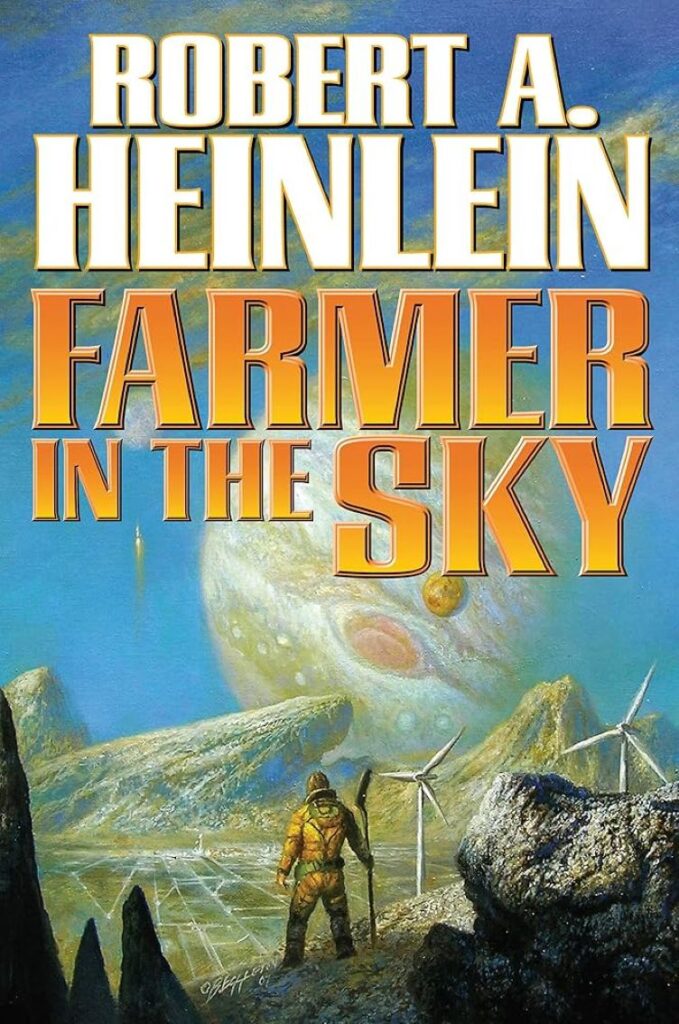
Because Bill is a newcomer, he needs to learn about Ganymede’s ecology, and about local farming techniques, from scratch. The reader learns along with him. Heinlein’s imaginings in this regard were some of the parts of the book I enjoyed the most.
Decades after I encountered Farmer in the Sky, I ran across a nonfiction book that also catered to my interest in rural living and farming techniques. Titled Dinner on Mars: The Technologies That Will Feed the Red Planet and Transform Agriculture on Earth, this book offers educated opinions, backed by an understanding of the latest research, on what it would take to grow food on the Red Planet.
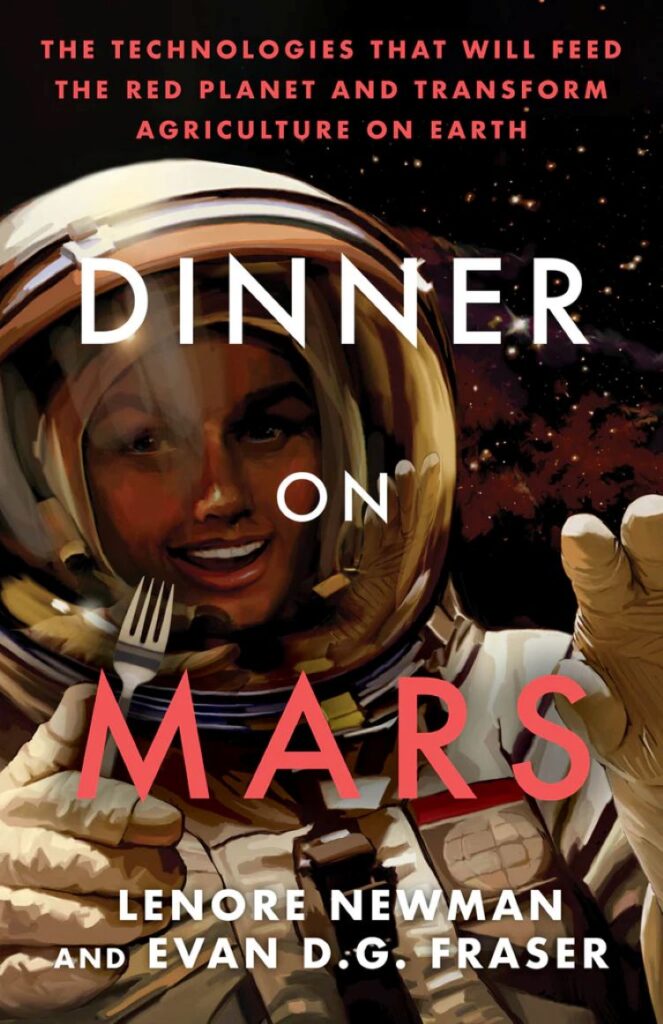
Authors Lenore Newman and Evan Fraser are well positioned to write a book of this nature. Newman is the Canada Research Chair in Food Security and the Environment at the University of the Fraser Valley, while Fraser is the Executive Director of the Arrell Food Institute, and a Professor of Geography at University of Guelph. Both have published books about food and food history.
The duo has, in essence, “devoted [their] professional energy to developing strategies to sustainably feed the world’s growing population.”
Mars isn’t Ganymede, of course, but some of the science described in Dinner on Mars is useful in assessing what Heinlein got right, and not so right, when it comes to farming on other planets and moons in our solar system.
While Bill and other homesteaders raise cows on Ganymede, Fraser and Newman doubt they’ll be found on Mars (and by extension, other locations in the Solar System), for a number of reasons. Chief among these is the resource demand. Humans will have their hands full growing food for themselves, let alone seeding pasture-land in inhospitable environments.
In the portion of Farmer in the Sky set on Earth before the family’s departure, Heinlein shows Bill cooking “Syntho-Steaks.” The authors of Dinner on Mars note that advances in cellular agriculture, 3-D printing, and other technologies have brought vat-grown meat closer to reality. In addition, “dairy-free” alternatives for ice cream and other products are now available, offering good taste and texture. Incorporating fish in a closed-loop aquaponic system offers an alternative for meat production that doesn’t place a huge strain on resources, while at the same time supporting other crops.
While Farmer in the Sky depicts agriculture on Ganymede as being very hands-on, Fraser and Newman anticipate that Martian farmers will deploy technology for monitoring and tending the plants, partly to maintain a sterile environment and partly from an efficiency viewpoint. At the same time, many autonomous or remote farming devices that might be deployed on Mars can also benefit farmers here on Earth.
There are some things that Heinlein and the authors of Dinner on Mars agree on. One is that social interaction and the opportunity for relaxation will be important. Bill lugs his accordion with him to Ganymede, while Newman and Fraser envision a lively night life on Mars to give people a much-needed break from the rigors of their daily jobs.
Given the cost of shipping goods from Earth, locally-sourced materials will be important. In Farmer in the Sky, Bill and the other inhabitants of Ganymede are eager to purchase locally-produced items, like the “product of Ganymede” crib made up of “glass fabric stuck together with synthetic resin” that Bill purchases when his siblings are born. Fraser and Newman speculate that humans on Mars will craft their own glass, which might be used in the construction of greenhouses, among other things.
Like Bill’s soil amelioration process, Fraser and Newman believe that bacteria will have a role to play in a successful Martian farming operation. And, just as Heinlein envisioned the development of species adapted to the Ganymede environment, the authors of Dinner on Mars note that genetic modifications will be helpful in giving plants the best chance of success in a new environment on Mars.
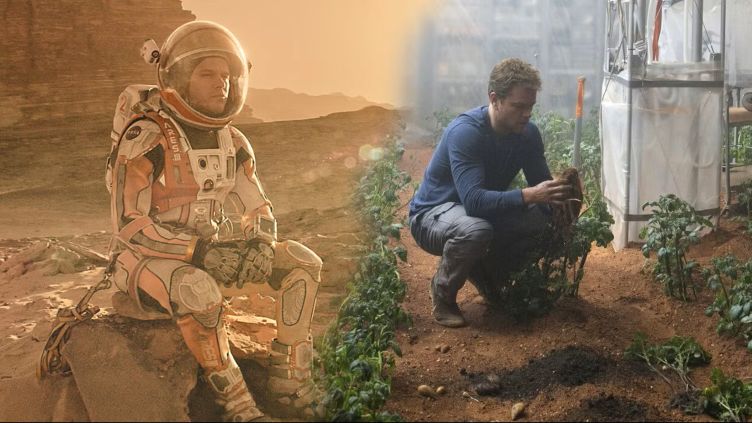
Image from The Martian with Matt Damon. Image credit: ScreenRant
Given the advances in food and farming technology depicted in Dinner on Mars, it’s easy to believe that establishing a base on another planet or satellite is becoming more and more feasible. A part of me — the part that enjoyed biking the dusty farm lanes — likes to think that Bill will make it to Ganymede one day after all, even if it may not go down exactly as Heinlein imagined.
— Guest post at Life After Gateway by Lisa Timpf, 13 August 2026
Lisa Timpf Biography

Ontario resident Lisa Timpf writes poetry, book reviews, short stories, and creative nonfiction. Her speculative poetry collections Cats and Dogs in Space (2025) and In Days to Come (2022) are available from Hiraeth Publishing in print and electronic formats. Lisa is a member of SF Canada and the Science Fiction and Fantasy Poetry Association. You can find out more about her writing projects at http://lisatimpf.blogspot.com/. Lisa is also on Bluesky, @lisatimpf.bsky.social
Bluesky: lisatimpf.bsky.social
Facebook: https://www.facebook.com/lisa.timpf.author
Web site: https://lisatimpf.blogspot.com/
———

———
Follow TSJ on Facebook.
Follow TSJ on X.
Follow TSJ on Instagram.
Follow TSJ’s Blog Life After Gateway, featuring one carefully curated news item from the world of Science Fiction, Mystery, Thriller, Horror, and Suspense each day. Enter your email in the “Subscribe to Blog via Email” widget on the right.
———

———
A Blanket of Steel by Timothy S. Johnston and from Fitzhenry & Whiteside, LTD. is the recipient of the 2024 GLOBAL Thriller Award GRAND PRIZE and the 2024 CYGNUS Award First in Category.


— Timothy S. Johnston, 13 August 2026
Great interview! I’m adding Farmer in the Sky to my TBR list.
Another detail, Ganymede is a world quite… cooold. But there can be crust moves of the ocean under the icy surface.
Thanks Lisa for taking the time to write about the ways of future farming !